MAIN MENU MOVED TO THE BOTTOM OF THE BLOG!

ads


Sign up for PayPal and start accepting credit card payments instantly.

Search This Blog

Showing posts with label Ownership. Show all posts

Friday, April 1, 2016

Microsoft Buys Canonical And Shuts Down Ubuntu Linux OS

From the last couple of years, fossBytes has been actively covering the developments in technology and open source. You might have come across numerous articles telling how badly Microsoft has fallen in love with Linux. The first day of Microsoft Build Developer Conference 2016 looked like another familiar affair when the company announced Bash shell for Windows. 

 However, the day 2 of Build 2016 came as a surprise and shock to the open source and Linux community. At the event, Microsoft announced that it has bought Canonical, the parent company of Ubuntu Linux, and shut down Ubuntu Linux forever. 

 Earlier this week, when we reported about Ubuntu coming to Windows 10, we didn’t expect this drastic step. Today, we’ve become fully acquainted with Microsoft’s evil plan. 

 Along with acquiring Canonical and killing Ubuntu, Microsoft has announced that it’s making a new operating system called Windows L. Yes, L stands for Linux. Oh, and also, it won’t be open source.


Monday, October 12, 2015

Facebook now officially owns WhatsApp

By Ellis Hamburger on October 6, 2014 10:20 am

Eight months after announcing its intent to acquire messaging giant WhatsApp, the deal has finally gone through. Facebook announced the closing of the deal with the SEC in the United States, and with the European Commission in Europe. Since the deal was announced for $19 billion, its price tag has actually increased to a whopping $21.8 billion. This is in part due to Facebook's rising stock price over the last several months, Recode points out.

As WhatsApp officially joins the Facebook fold, WhatsApp founder Jan Koum has joined Facebook's board. He will also be paid just $1 per year like Facebook CEO Mark Zuckerberg, according to filings, but has been given a very hefty purse of Facebook shares to hold on to. Facebook now has the right to do whatever it wants with WhatsApp, though the company likely won't make any dramatic changes to the service for a long while. Facebook has pledged to operate its latest acquisitions, from Instagram to Oculus, largely independently — seeing as these companies were already doing so well on their own. For example, don't expect WhatsApp to abandon its $1 / year business model or add advertisements any time soon.

"There would have been no partnership between our two companies if we had to compromise on the core principles that will always define our company, our vision and our product," Koum said when the deal news broke months ago. Facebook does, however, plan to its new businesses to achieving larger scale, according to Facebook. Like Mark Zuckeberg said on a recent earnings call, it's all about ramping up Instagram, Oculus, and now WhatsApp to reaching one billion users. So why mess with something that isn't broke?


Monday, October 5, 2015

reverse takeover of google by Alphabet.

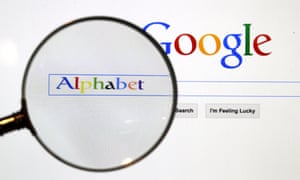
 Google Inc is changing its operating structure by setting up a new company called Alphabet Inc, which will include the search business and a number of other units.
Google Inc is changing its operating structure by setting up a new company called Alphabet Inc, which will include the search business and a number of other units. Photograph: PAWEL KOPCZYNSKI/REUTERS


Google is now Alphabet. Temporary Holding Company Number Two is now Google. And “don’t be evil” is now one step closer to being a thing of the past.


Following the corporate reshuffle at Google, the world’s largest search firm is now owned by a holding company called “Alphabet” – which, confusingly, was temporarily a subsidiary of Google but then executed a “reverse takeover” of its parent company to become the new boss, at which point Google spun off a number of its own subsidiaries such as its life sciences subsidiary Calico and “moonshot” division X to sit under Alphabet.
The end result is that the Google we all know and love still exists, but sits under an entirely new company, with a new name, new brand, new website – and new ethics policy.
When Alphabet was revealed, it was made clear that Google’s pre-existing ethics policy would only apply to the search firm itself, rather than its parent company. But now that Alphabet has revealed its own Code of Conduct, and the words “don’t be evil” are nowhere in sight.
Instead, the holding company has a rather less pithy set of requirements for its employees, including “avoid conflicts of interest”, “ensure financial integrity and responsibility” and “obey the law”.
That means that Google’s own companies, including YouTube and Android, are still run with a code of conduct that includes the command “don’t be evil” (as well as the less well-known statement that “we like cats, but we’re a dog company”), while the companies that sit directly under Alphabet aren’t.
Alphabet’s other subsidiaries such as X, the division in charge of the company’s balloon-powered internet drone delivery projects, will still have the ability to set their own codes of conduct, just as Google itself has. But the company itself leads on the highly catchy requirement that “Employees of Alphabet and its subsidiaries … should do the right thing – follow the law, act honorably, and treat each other with respect.”
It isn’t the first time Google has downgraded “don’t be evil” in its internal communications. In 2009, the company quietly dropped the line from “motto” to “mantra”, as part of a rebranding of its corporate PR – a far cry from the early noughties, where the phrase had even been included in the company’s 2004 intial public offering.

original title : Where Google said 'don't be evil', Alphabet just wants employees to 'obey the law'


Monday, March 24, 2014

fixing the Internet?

Last week, the administration said the United States will begin negotiations to cede control of one of the Net’s most powerful institutions, the Internet Corporation for Assigned Names and Numbers, or ICANN. Currently overseen by the Department of Commerce, ICANN will be taken over by an international agency to be assembled later. The process is set to begin next week in Singapore, where the current ICANN members are scheduled to meet.

Who controls the Internet?
a short history & the future? 
Published on 24 Mar 2014

The Internet began as a Pentagon-funded project called ARPANET, a network linking computers in some American universities and government agencies. Eventually, it was opened up to become the world wide web, connecting everything from computers and mobile phones to tablets and video game consoles.No one government fully controls the Internet, but the US does regulate some protocols. Faced with pressures, it is now considering relinquishing some of it to global stakeholders.Al Jazeera's Gerald Tan reports.


Wednesday, February 19, 2014

Facebook To Buy WhatsApp For $19 Billion


Facebook announced on Wednesday afternoon that it had reached an agreement to buy popular mobile messaging startup WhatsApp for an upfront total of $16 billion, including $4 billion in cash and about $12 billion in Facebook shares.
Co-founder and CEO Jan Koum will join Facebook’s Board of Directors, but WhatsApp will continue to operate independently within Facebook, much like Instagram. The purchase price could rise to as much as $19 billion once you factor in an additional $3 billion in restricted stock units that will be granted to WhatsApp’s founders and employees vesting over four years.

full news here >>>


Thursday, November 7, 2013

Experts Say Leave Twitter IPO to Professionals

Published on 7 Nov 2013 | Google Voice Search aims to understand the context of requests, allowing follow-up questions to be asked on the same topic. This means someone asking about the current weather in Birmingham, for example, could then ask: "How do I get there?" - without reminding the device which city they are referring to. Google claim the new voice search is faster than its nearest rival, Apple's Siri facility, and also provides users with more detailed answers.


Saturday, September 14, 2013

The next big IPO : Twitter

Twitter well-placed to exploit the future

The news of the initial public offering of Twitter Inc. is unsurprisingly doing well on the micro-blogger's platform. It is the most hotly anticipated IPO since that of its predecessor as the hot social networking platform, Facebook, in May 2012. As it stands, the announcement appears to be a clever trial balloon. It enables the pioneering micro-blogging company to test the waters for valuations, without any obligation to actually undertake an IPO in a given timeframe. What Twitter did was to use the "jumpstart our business startups" or JOBS option to file an S-1 declaration to the US Securities and Exchange Commission. The S-1 merely signifies an intention to make an IPO sometime. The financials declared may be kept confidential until 21 days before the first IPO road show. In fact, Twitter was under no obligation to even declare it had filed an S-1. All that's known for sure is that Goldman Sachs is the lead underwriter, and that annual revenues are under $1 billion, since that is the cut-off for S-1 eligibility. Market estimates are that revenues are about $500-600 million. Previous venture capital offerings suggest Twitter is valued at around $11-14 billion; but it reportedly refused a 100 per cent buyout offer for $14 billion earlier this year. Silicon Valley believes that Twitter's revenues more than doubled in the last year and revenues could treble again by 2015. Its CEO, Dick Costolo, claims that Twitter makes more from mobile micro-applications, than from web advertising. This is interesting since mobile is the growth platform of the future, and Twitter appears well-placed to exploit it.

Comparisons with Facebook are inevitable. Twitter has just 200 million accounts compared to Facebook's billion-plus. And Facebook's market value at $110 billion is also many multiples more than that of Twitter. However, Twitter users match Facebook users in terms of sheer volume. People tend to tweet far more often than they update Facebook. The social media search engine, Topsy, has indexed over 425 billion tweets since 2010. The service has evolved from the simple text messages it offered when launched back in 2007. Twitter delivers multimedia content, embedded links and micro-applications. It is the latter that are reportedly generating the major mobile revenue. The platform-agnostic nature of 140-character tweets is of major importance. It means Twitter is similar in looks and functionality on mobile and the big screen, and no more difficult to use than a short messaging service or SMS. Facebook, in contrast, has struggled to generate revenues on mobile, where it offers an attenuated experience compared to the big screen. As more people go mobile, it is difficult not to imagine that the future belongs to Twitter.

The immediacy of Twitter contact and the ability to reach total strangers are revolutionary. The hashtag (#) delineating content has proved so popular that other social media companies are trying to emulate it. Twitter also triggered new paradigms in terms of political, bureaucratic and corporate brand-building and feedback since it removed the layers insulating billionaire CEOs, political leaders and bureaucrats from the common man. It has also forced media to accelerate the delivery of breaking news. Everything from the raid that killed Osama bin Laden to the Boston bombings to Tahrir Square, sundry natural disasters and communal riots hits Twitter within minutes. Adoption is growing - fastest, it appears, in the 55-64 age group - the age-cohort with the most money. Monetising any web-based service has always been a headache. Twitter seems to have put together a working business model with its combination of advertising, direct marketing reach and its micro-applications. The IPO strategy, timing, pricing and structuring will presumably depend on the feedback it gets from the S-1 announcement. Well-handled, the IPO could be more successful than Facebook's, which has so far, struggled to justify its IPO valuations.

source >>>


Monday, May 20, 2013

Yahoo acquire Tumblr!

I’m delighted to announce that we’ve reached an agreement to acquire Tumblr! 
We promise not to screw it up.  Tumblr is incredibly special and has a great thing going.  We will operate Tumblr independently.  David Karp will remain CEO.  The product roadmap, their team, their wit and irreverence will all remain the same as will their mission to empower creators to make their best work and get it in front of the audience they deserve.  Yahoo! will help Tumblr get even better, faster.
Tumblr has built an amazing place to follow the world’s creators. From art to architecture, fashion to food, Tumblr hosts 105 million different blogs.  With more than 300 million monthly unique visitors and 120,000 signups every day, Tumblr is one of thefastest-growing media networks in the world.  Tumblr sees 900 posts per second (!) and 24 billion minutes spent onsite each month.  On mobile, more than half of Tumblr’s users are using the mobile app, and those users do an average of 7 sessions per day.  Tumblr’s tremendous popularity and engagement among creators, curators and audiences of all ages brings a significant new community of users to the Yahoo! network.  The combination of Tumblr+Yahoo! could grow Yahoo!’s audience by 50% to more than a billion monthly visitors, and could grow traffic by approximately 20%.
In terms of working together, Tumblr can deploy Yahoo!’s personalization technology and search infrastructure to help its users discover creators, bloggers, and content they’ll love.  In turn, Tumblr brings 50 billion blog posts (and 75 million more arriving each day) to Yahoo!’s media network and search experiences.  The two companies will also work together to create advertising opportunities that are seamless and enhance user experience.
As I’ve said before, companies are all about people.  Getting to know the Tumblr team has been really amazing.  I’ve long held the view that in all things art and design, you can feel the spirit and demeanor of those who create them.  That’s why it was no surprise to me that David Karp is one of the nicest, most empathetic people I’ve ever met.  He’s also one of the most perceptive, capable entrepreneurs I’ve worked with.  His respect for Tumblr’s community of creators is awesome, and I’m absolutely delighted to have him and his entire team join Yahoo!.   
Both Tumblr and Yahoo! share a vision to make the Internet the ultimate creative canvas by focusing on users, design — and building experiences that delight and inspire the world every day.

Monday, September 24, 2012

US Tech Stocks all down except google!

Facebook, Apple highlight tech retreat Google edges higher after Citigroup ups its price target to $850

SAN FRANCISCO (MarketWatch) — Declining shares of Facebook Inc. and Apple Inc. highlight an early tech sector retreat on Monday, even as a Google Inc. got a lift from an upbeat Citigroup review.
Facebook FB -9.10%  fell 7% to $21.27 on a Barron’s analysis arguing that the stock is worth just $15.

In tech, content is king

In the war over technology platforms, content is a potent weapon. Companies like Netflix, Pandora and Yelp risk getting squeezed in the middle.
Apple AAPL -1.77%  was down about 1.3% after the company announced that it has sold 5 million iPhone 5s since the smartphone went on sale three days ago. The number was below what some analysts had projected. See story on iPhone 5 sales.
Meanwhile, Google GOOG +1.83%  bucked the downward trend, rising 1% to $740.85 after Citigroup analyst Mark Mahaney raised his price target to $850.
“We’re now back at the peak. And we believe Google shares can rise materially higher over the next 12 months,” Mahaney wrote. He argued that key hurdles for the stock are “abating,” including worries about the impact of its acquisition of Motorola Mobility and stiffer competition from Facebook.

source here  >>>


Saturday, September 1, 2012

Facebook stock continues its decline

Published on Aug 31, 2012 by AlJazeeraEnglish : Facebook's stock prices are continuing to tumble. The social media website went public in May raising the company's worth to more than one-hundred billion dollars. Investors have seen the continuing failing of their stock drop from $38 to $19.


Friday, August 31, 2012

Go Google: Google Drive

Published on Apr 24, 2012 by Google ; Introducing the all-new Google Drive. Now access your files, even the big ones, from wherever you are. Share them with whomever you want, and edit them together in real time.


Thursday, August 30, 2012

State approves Facebook’s plan to issue stock for Instagram purchase


The state of California today approved Facebook’s plan to acquire Instagram for $300 million in cash and 23 million shares of its stock. This brings the deal, which was announced in April, closer to closing. Instagram shareholders still have to vote to formally approve the sale.
This morning lawyers and employees from Facebook and Instagram attended a “fairness hearing” before the California Department of Corporations. Facebook called for the hearing as a way to obtain exemption from federal registration and speed up the acquisition process. Without a state-level fairness hearing, it can take more than six months and over $250,000 to register a securities offering, according to the California Department of Corporations website. California is one of six states in the U.S. that allow this quicker and more cost-effective review.
Since the time Facebook announced its intent to buy Instagram, its shares have lost significant value on the public market. The formerly $1-billion deal is now worth close to $750 million at Facebook’s $19.10 share price as of today at 1 p.m. PT. The LA Times reports that co-founder and CEO Kevin Systrom says he recognized the risk of Facebook losing value and was negotiating on the basis of cash and stock options, not the end valuation. He says the media played up the $1-billion valuation, but he believes Instagram’s 19 shareholders will still vote in favor of the deal.
“We still believe firmly in the long-term value of Facebook,” he said.
Systrom also revealed that although he had been approached by other companies looking to buy Instagram, no formal offers had been made.
Last week, the Federal Trade Commission closed its investigation of the acquisition without taking any action, allow the deal to proceed. Instagram has gained more than 50 million new users in the four and a half months since Facebook announced its plans to acquire the mobile photo-sharing network.

Monday, August 27, 2012

Winner and losers from the Samsung Apple clash

Published on Aug 27, 2012 by Euronews : Samsung's big loss to Apple in a potentially game changing US patent lawsuit over smartphones meant a dramatic fall in the South Korean company's shares in Soeul - down almost 7.5 percent - while Apple's stock rose in New York on Monday.

But the industry is still sorting out who will be the long term winners and losers in the smartphone world.

Google may suffer as it supplies the Android operating system for Samsung phones. That means it could lose out if Apple manages to get permanent bans on the sale of some Samsung handsets.

A decision on that is due from the court next week.

Partially blocking Samsung from the US market could dramatically change the league table where the South Koreans dominate with 32.6 percent of all smartphone sales worldwide between April and June. Apple had 16.9 percent, Nokia 6.6 percent, Taiwan's HTC 5.7 percent and China's ZTE had 5.5 percent.

Investors obviously think Nokia could be a winner from Samsung's setback.

The Finnish firm's shares shot up on Monday. Its newest smartphones use a Microsoft operating system, which Apple has no problems with.

Other handset makers will now be worrying whether they will be next on Apple's litigation list and how much this case will change the dynamics of the highly competitive mobile phone industry.


Sunday, August 26, 2012

Samsung bites back after Apple victory

Published on Aug 26, 2012 by AlJazeeraEnglish : South Korean technology giant Samsung says consumers will now face fewer choices, less innovation and higher prices. That is after a US jury ordered the company to pay more than one billion dollars to Apple for stealing its technology. It is only one of the many international legal battles between the two, all of which could change the industry.


IP- a threat to knowledge for human benefit & free market?

Samsung ordered to pay Apple $1bn

Published on Aug 24, 2012 by AlJazeeraEnglish : A California jury has found that Samsung, the Korean electronics giant, deliberately copied elements of Apple's iOS-based product line.

The jury ruled that Samsung willfully infringed at least three of Cupertino-based Apple's patents, including navigation, zoom features and icons.


Thursday, August 23, 2012

Microsoft Unveils a New Look


In advance of one of the most significant waves of product launches in Microsoft’s history, today we are unveiling a new logo for the company.
It’s been 25 years since we’ve updated the Microsoft logo and now is the perfect time for a change. This is an incredibly exciting year for Microsoft as we prepare to release new versions of nearly all of our products. From Windows 8 to Windows Phone 8 to Xbox services to the next version of Office, you will see a common look and feel across these products providing a familiar and seamless experience on PCs, phones, tablets and TVs. This wave of new releases is not only a reimagining of our most popular products, but also represents a new era for Microsoft, so our logo should evolve to visually accentuate this new beginning.

The Microsoft brand is about much more than logos or product names. We are lucky to play a role in the lives of more than a billion people every day. The ways people experience our products are our most important “brand impressions”. That’s why the new Microsoft logo takes its inspiration from our product design principles while drawing upon the heritage of our brand values, fonts and colors.

read more  >>


Apple-Samsung Patent Case : Consumers the real losers?

Published on Aug 22, 2012 by AssociatedPress : Jurors began deliberating Wednesday in a multibillion dollar patent infringement case pitting Apple against Samsung over the design of iPhones and iPads, but few experts were expecting a quick verdict. (Aug. 22)


Tuesday, June 19, 2012

Facebook buys Face.com


SAN FRANCISCO (MarketWatch) |  June 18, 2012 
Facebook Inc. said Monday that it has acquired facial-recognition technology company Face.com for an undisclosed sum.

Reuters
Facebook bought Face.com on Monday for an undisclosed sum.
Face.com is a three-year-old firm based in Tel Aviv, Israel, that has developed technology used for facial recognition on photos loaded onto websites and through mobile applications. The company has released two apps used on FacebookFB -0.10% called Photo Finder and Photo Tagger.
Shares of Facebook closed up nearly 4.7% to $31.41 on Monday. The stock has gained more than 20% since sliding close to the $26 mark earlier this month after a disappointing IPO on May 18, at which the stock debuted at $38 per share.
In a brief statement, Facebook said the company’s technology “has helped to provide the best photo experience” for people sharing photos over the social network.
“This transaction simply brings a world-class team and a long-time technology vendor in house,” the statement read.
By Dan Gallagher, Original post in MarketWatch


Monday, June 11, 2012

UK technology sector gets (US) financial support


A US hi-tech investment bank with $20bn in assets has opened its first UK branch offering banking and loan services to the technology industry.  
Silicon Valley Bank (SVB), a subsidiary of SVB Financial Group, is looking for UK customers in the technology, life science, private equity and venture capital sectors, according to theBBC.
Silicon Valley Bank (SVB) counts Cisco Systems, Mozilla and Pinterest among its US clients. Itt has lent hundreds of millions in the UK already and plans to increase this to billions very quickly by making loans of £300,000 to £30m to established firms looking to expand.
SVB claims over half of all venture capital-backed technology and life science companies bank with the group. In the US, it has made $7bn in loans.
The bank's move is regarded as an endorsement of the UK technology sector. Chancellor George Osborne said it proves the UK is fast becoming the technology centre of Europe.
Phil Cox, SVB's head of UK, Israel and India, told the BBC that existing retail banks are failing to serve smaller technology companies who may not have three years' worth of accounts yet or even any sales.
UK bank Cambridge & Counties estimates that 60,000 loan and overdraft applications worth £3bn were rejected by banks in the second half of 2011.
The bank, established to service small and medium-sized businesses, is owned jointly by Cambridgeshire Local Government Pension Fund and Cambridge University college, Trinity Hall.

Fujitsu Computer Systems Corporation